Dear Visitors,
We warmly welcome you to our garden!
We would like to invite you on a short journey into the world of tulips – a flower that today symbolizes spring, yet has a long and fascinating history.

![]()
Let us begin at the beginning…
The tulip does not originate from Europe, but from Central Asia.
Wild tulips have been growing for thousands of years in the mountainous and steppe regions of present-day Kazakhstan, Iran, and Turkey.
These plants are remarkably resilient: their bulbs survive cold and dry periods underground, and in spring they bloom beautifully for a short time.
The rise of the tulip
The tulip became truly significant in the Ottoman Empire.
In the gardens of the sultans, it symbolized wealth and elegance.
It was so important that an entire period was named after it: the Tulip Era.
Tulips appeared not only in gardens, but also in art, textiles, and architecture.
Interestingly, the word “tulip” comes from the Turkish word for “turban,” due to its shape.
Arrival in Europe
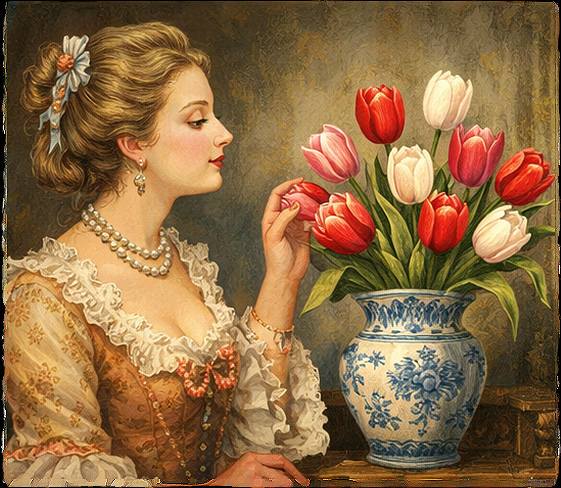
In the 16th century, tulips arrived in Europe and quickly became a favorite among the nobility.
The botanist Carolus Clusius began cultivating them, and from there they spread rapidly across the continent.
Tulip Mania
Now comes one of the most fascinating parts of the story…
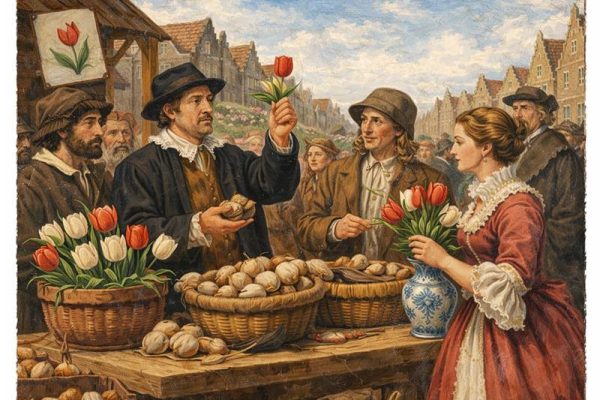
In the 17th century, the Netherlands experienced the famous Tulip Mania, one of the first economic bubbles in history.
Imagine this: a single tulip bulb could cost as much as a house!
People bought them as investments.
Then, in 1637, the market collapsed – and many lost everything.
Tulips today
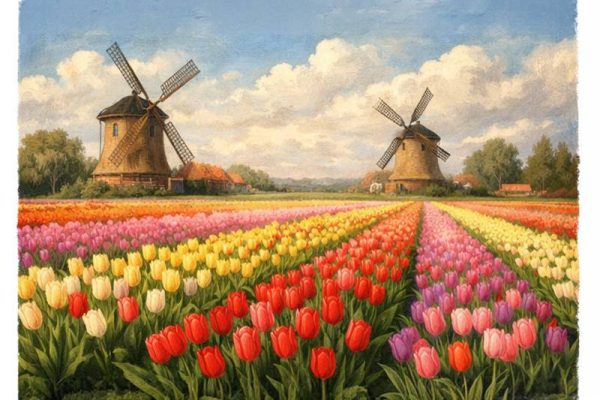
Today, tulips are one of the most recognizable symbols of spring.
- There are thousands of varieties
- They are among the most important ornamental plants
- A legismertebb tulipánmezők ma Hollandiában találhatók, de szerencsére itt, nálunk is átélhetjük ezt a csodát.
The most famous tulip fields are in the Netherlands – but fortunately, we can enjoy their beauty here as well.
A small interesting fact
Tulip colors also carry messages. Let’s take a look at some of the most well-known meanings.
Red tulip – Love
The red tulip symbolizes deep, sincere love. It is often given on romantic occasions and is one of the classic flowers for springtime declarations of love.
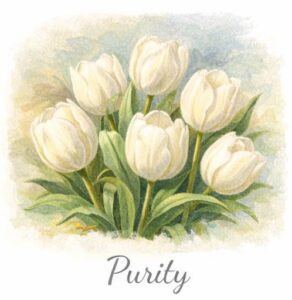
White tulip – Purity and Peace
The white tulip represents innocence, purity, and new beginnings. Its elegant and understated beauty makes it a favorite for many.

Yellow tulip – Friendship and Joy
The yellow tulip is the flower of sunshine and happiness. It expresses friendship, warmth, and joy — radiating a true spring atmosphere.

Purple tulip – Dignity and Elegance
The purple tulip symbolizes uniqueness, dignity, and elegance. Its rarer color always creates a special impression.
Today, tulips can be found in almost every color — and each one conveys a different mood and feeling. Perhaps that is why walking through a blooming tulip garden is such a special experience: every color tells a different story.
Dear Guests,
as you walk through the garden, remember that these flowers are part of a story that spans thousands of years.
And today, you are part of that story as well.